

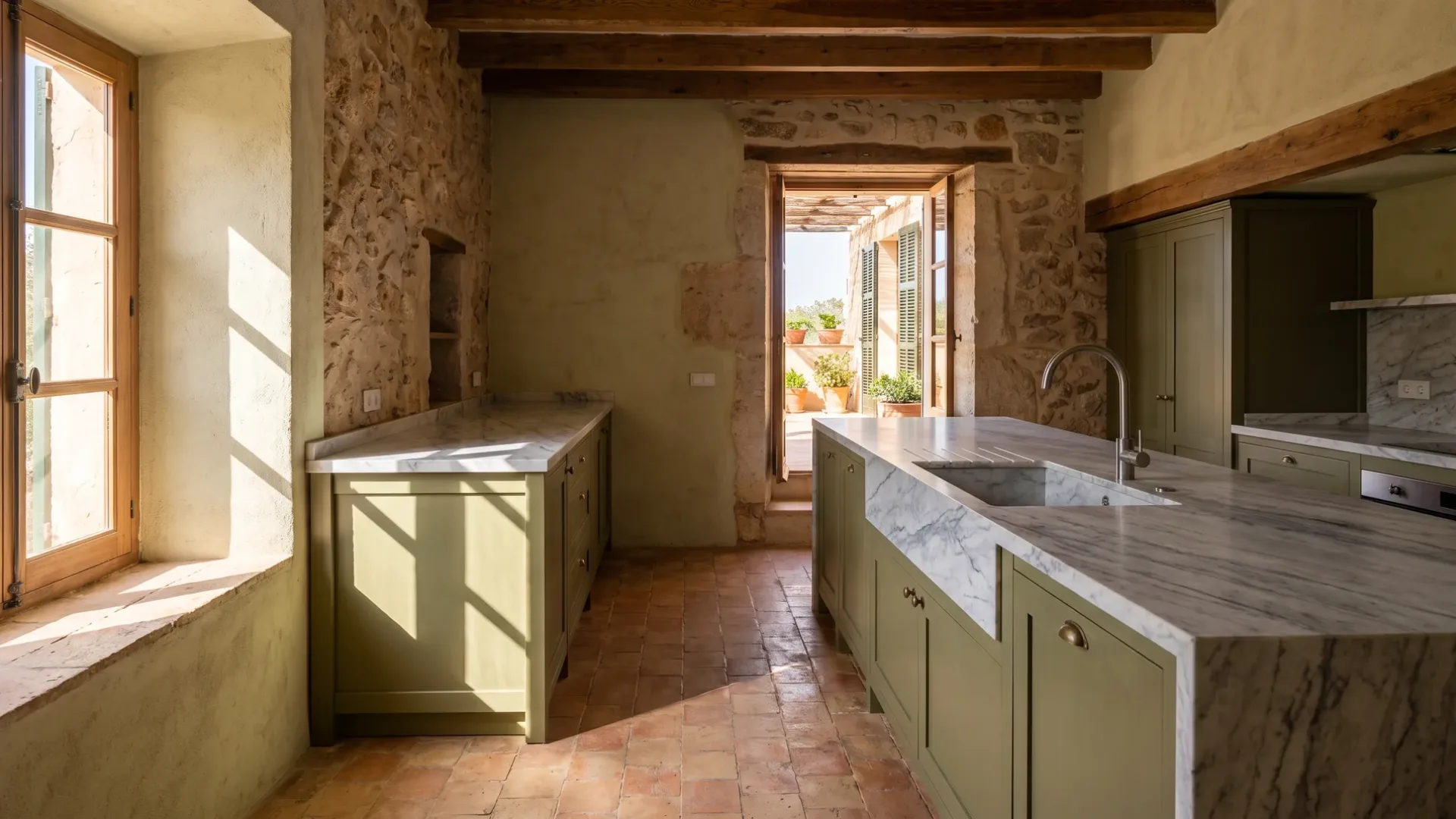
Kitchen Worktops in Mallorca
The worktop is the surface the kitchen is used on, a large part of the budget, the decision that most sets the look, and the one people regret most often when it was made quickly. This page is the comparison: what each material does in a kitchen on the island, and what to ask before choosing. Describe the kitchen and we pass the request to kitchen companies and kitchen specialists that supply and fit the worktop you choose.
request describes the job
companies see it
for you, always
obligation to accept
Choose your kitchen worktop material
Seven materials, what each is good at, and where each is a compromise. The cards go to the guides that go deeper.
Marble
Quartz
Porcelain
Granite
Sintered stone
Microcement
Wood
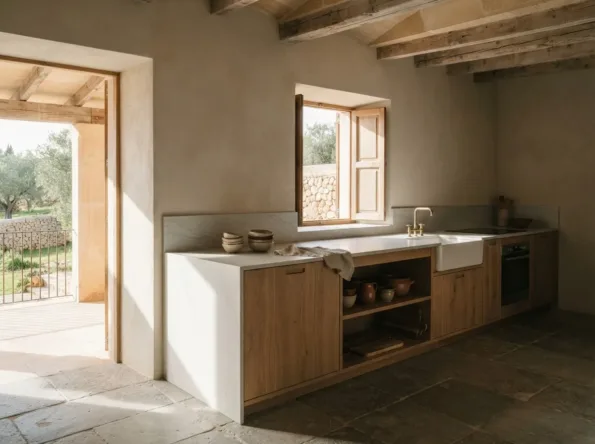
What a worktop has to do on this island
A kitchen on Mallorca is used differently from one in a northern city. It is often open to a terrace, so the worktop takes sun through glass for hours in August. It is often shut for the winter, so it sits in a closed, humid house for months. In a rental it is used by people who do not know what it is. And near the coast, salt in the air reaches every surface in the house.
Those four things sort the materials quickly. Porcelain and sintered stone take heat and sun without complaint, and the same slab can continue onto the terrace. Quartz is forgiving of the rental guest with a hot pan and a glass of red wine, up to the point where direct sun and heat are the problem. Marble is beautiful and honest about what it is, and it marks. Wood needs an owner who is there to oil it.
None of that makes any of them wrong. It makes the choice a question about the house and the people in it, which is the question the companies will ask.
What to decide beyond the material
The material is the first decision. These are the ones that follow, and each of them changes the price and the look.
- Appearance: veining, colour, matt or polished, and how it sits with the fronts
- Durability and stain resistance, against how the kitchen is actually used
- Heat resistance, and whether hot pans go straight down
- Maintenance: sealing, oiling, or nothing
- Edge profile: square, bevelled, mitred, or a thick built-up edge
- Thickness, and what the cabinets have to carry
- Integrated sinks and drainer grooves, or an undermount
- A waterfall end on the island, in the same slab
- Full-height splashbacks in the same material
- Indoor and outdoor continuity through a glass wall
- How the slab reaches the room, and whether it comes in one piece
Comparisons people actually make
The pairs that come up most, and what usually decides them.
-
01
Marble against quartz
Marble is unrepeatable and marks; quartz is consistent and forgiving. An owner who will love the patina chooses marble. A family, a rental, or anybody who wants to stop thinking about it chooses quartz.
-
02
Quartz against porcelain
Quartz is warmer to the touch and has more colour range; porcelain is thinner, takes heat and sun better, and can go outside. In a kitchen that opens onto a terrace, porcelain usually wins the argument.
-
03
Granite against porcelain
Granite is natural, heavy and individual; porcelain is manufactured, light and consistent. A traditional finca kitchen leans to granite; a contemporary villa kitchen to porcelain.
-
04
Natural stone against engineered surfaces
Natural stone is a material with a history and a pattern of its own; engineered surfaces are designed to a specification. The first is chosen for what it is, the second for what it does.
-
05
The best worktop for a Mediterranean kitchen
One that takes the light and the heat and belongs to the palette of the house: honed stone, warm porcelain, microcement over the whole run.
-
06
The best worktop for an outdoor kitchen
Porcelain or sintered stone, or a dense granite. Anything that neither fades in the sun nor holds water in the winter.
Where the worktop goes
Outdoor kitchens
Bespoke kitchens
How your request reaches a company
Mallorca Kitchens is a comparison service. A request for a kitchen worktop goes to the kitchen companies and kitchen specialists on our list; they quote the work and carry it out, and any agreement is between you and the company you pick.
-
01
Describe the job
Tell us the property, roughly what you want and where it is. Photographs and a rough plan help, though neither is required.
-
02
We match it
The request goes to companies that work in your area and take on this kind of job at this size.
-
03
They quote you
Each company contacts you directly with its own price, timing and approach. We do not set any of it.
-
04
You compare and choose
Put the quotes side by side and take the one you want, or none of them. Using the site costs you nothing.
Which worktop material is best for a Mallorca kitchen?
It depends on the house. Porcelain and sintered stone take sun and heat and can continue outside. Quartz suits a kitchen used hard and cleaned quickly. Marble suits an owner who accepts the marks as part of the material. Wood suits an owner who is there to look after it. The material selector above sorts them by what each is good at.
Is marble practical for a kitchen worktop?
Practical is the wrong word; honest is closer. Marble etches with acid and marks with oil, and a honed finish and a sealer slow that without stopping it. Owners who choose it and love it treat the marks as the material ageing. Owners who wanted a surface that stays as it was fitted are happier with quartz or porcelain that looks like marble.
Is porcelain better than quartz?
Better at heat, sun and going outside. Quartz is better at warmth to the touch, colour range, and forgiving an impact on an edge. In a kitchen that opens onto a terrace, porcelain usually wins; in a closed kitchen used hard, quartz often does.
Can a worktop continue outside onto the terrace?
Yes, in porcelain, sintered stone or a dense granite. Quartz and wood do not belong outside here, and marble outdoors is a decision to be made with open eyes.
Why does a large island cost so much more?
Because a worktop is priced by the slab and the metre, and an island is often the largest single piece in the kitchen, sometimes with a waterfall end in the same slab. It also has to reach the room in one piece, which on a village stair or a finca track is its own question.
Get worktop quotes
Say which material you are leaning to, or say you are not sure, and let several companies price the same kitchen.